
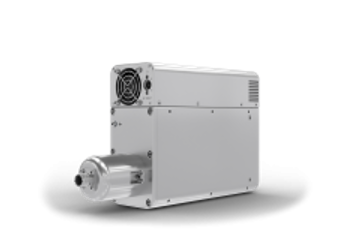
Precision inspection depends on obtaining consistent information from objects without damaging them. Compact X-ray sources make this possible in systems where controlled radiation, accurate positioning, and efficient equipment design must work together. For compact X-ray source manufacturers, developing such technology involves balancing output, focal spot characteristics, thermal behaviour, shielding, dimensions, and application requirements. These factors can determine how effectively an inspection system reveals internal features, defects, contaminants, or material differences.
The value of compact X-ray technology is not simply its smaller physical size. A carefully engineered source can provide the electrical and radiation characteristics required by a particular inspection process while fitting within equipment with demanding dimensional constraints.
Understanding Compact X-Ray Sources in Precision Inspection
A compact X-ray source is an engineered assembly designed to generate X-rays within a relatively small physical footprint. Depending on its configuration, it can combine an X-ray tube with high-voltage power and control electronics, reducing the need for separate components around the tube. This architecture can be useful where inspection equipment requires carefully coordinated electrical and mechanical elements.
Precision inspection places particular importance on controllable X-ray output. The source must operate within defined voltage and current ranges so the system can produce suitable radiation for the material and inspection task. When the source characteristics match the detector and object, the resulting system can capture useful internal information more consistently.
Technical Characteristics That Support Precision
The suitability of a compact source depends on several engineering characteristics, not size alone. Its electrical output, beam configuration, focal spot, cooling arrangement, and shielding can influence the inspection system’s capabilities. Engineers need to consider these characteristics together because changing one parameter may affect other parts of the equipment.
1. Focal Spot Control
Focal spot size can influence the sharpness of an X-ray image. A smaller focal spot can support higher spatial resolution in suitable applications because it can reduce geometric unsharpness. The appropriate specification depends on the distance between the source, object, and detector and the resolution required by the inspection task.
2. Stable X-Ray Output
Consistent output is important when images or measurements need to be compared across repeated inspections. Controlled voltage and current help establish repeatable exposure conditions, reducing unnecessary variation between inspection cycles.
3. Suitable Beam Geometry
Beam angle and radiation distribution affect how an object can be positioned relative to the source and detector. A suitable beam configuration can help engineers arrange components around the inspection area and target the region that needs to be examined.
4. Thermal Management
X-ray generation and high-voltage conversion produce heat. Compact equipment has limited internal space, making thermal management important. Appropriate cooling can help maintain operating conditions during the intended duty cycle and support dependable equipment behaviour.
5. Integrated Control Electronics
Combining control electronics with source components can simplify coordination between the generator and tube. It can also give OEM engineers a defined subsystem for controlling operating parameters and incorporating the source into automated inspection equipment.
6. Shielding Considerations
X-ray equipment requires appropriate radiation protection. A source designed with shielding considerations in mind can help equipment developers address radiation management as part of the source architecture, subject to the requirements of the complete system and applicable regulations.
Applications Where Precision Matters Most
Compact X-ray sources can serve inspection environments where internal visibility is valuable, but equipment dimensions, positioning, or mobility impose practical limitations. Industrial non-destructive testing can use X-rays to examine components for internal discontinuities. Food inspection systems can detect certain foreign materials within packaged products. Security equipment can inspect baggage and parcels, while electronics applications can support examination and component counting.
The specific source configuration should reflect the application. Industrial inspection may emphasise penetration and durability, while electronics inspection can place greater importance on fine detail. This is why compact X- ray source manufacturers must consider application requirements when developing source configurations rather than treating compactness as the only design objective.
Factors Engineers Should Evaluate
Selecting a compact source requires a clear understanding of the complete inspection setup. Engineers should establish the required voltage, current, power, focal spot, beam characteristics, exposure pattern, cooling method, and available installation space. Detector sensitivity and object geometry also influence the appropriate configuration.
The physical relationship between source, object, and detector deserves particular attention. Source-to-object and source-to-detector distances can affect magnification, resolution, and image geometry. A compact source can provide greater placement flexibility, but the final arrangement still needs to be engineered around the required inspection results.
- X-ray voltage range
- Tube current range
- Maximum output power
- Focal spot specification
- Beam angle and geometry
- Duty-cycle requirements
- Cooling arrangement
- Shielding requirements
- Mounting dimensions
- Control interfaces
Reviewing these points together helps create a balanced specification. It also gives OEM development teams a clearer basis for comparing available source technologies against the requirements of a particular precision inspection system.
Compactness Without Compromising Engineering Requirements
A smaller source can provide practical advantages, but reducing dimensions should not mean overlooking electrical, thermal, or radiation-management requirements. Precision equipment needs a source that fits physically while delivering characteristics appropriate for the inspection objective.
For this reason, compact X-ray technology is most effective when its size comes from thoughtful engineering. Integration, component selection, cooling, shielding, and control architecture all contribute to the final product. A well-developed source helps equipment designers use internal space more effectively while maintaining the operating characteristics required by the application.
See also: The Ultimate Kultakeihäskyy Guide With Expert Tips
Conclusion
Compact X-ray sources are suitable for precision inspection because they can combine controlled X-ray generation with application-focused engineering in a relatively small package. Focal spot characteristics, stable output, beam geometry, thermal management, shielding, and control capabilities all contribute to their usefulness. When matched with the inspection setup, compact sources can support detailed, repeatable examination across several industries.
For those looking for specialised technology for demanding inspection equipment, VJ X-Ray OEM solutions provide an application-focused approach to X-ray source development. VJ X-Ray manufactures integrated X-ray sources and high-voltage generators for security, food, industrial, medical, electronics, and analytical applications. Its emphasis on compact engineering, customisation, and dependable X-ray technology makes VJ X-Ray a strong partner for OEMs seeking practical source solutions for precision inspection systems.